
Easter Warning for Pawrents: Chocolate Toxicity in Dogs (And Why Small Dogs Are Most at Risk)
Easter and chocolate go hand-in-hand… but for our Spoilt Dogs, it’s one of the most dangerous times of the year.
And here’s the part most people don’t realise:
It’s not just how much chocolate your dog eats, it’s how small your dog is and what type of chocolate it is that makes it dangerous.
At 3 Spoilt Dogs, where we specialise in small breeds, this risk is amplified. A tiny Cavoodle or Moodle can become seriously unwell from what looks like a harmless amount. Let’s break it down in a way most blogs don’t.
Why Chocolate Is Toxic to Dogs (The Quick Version)
Chocolate contains theobromine, a stimulant dogs can’t process efficiently. It builds up in their system and affects:
- The nervous system
- The heart
- The digestive system
Even small amounts can cause symptoms like vomiting, restlessness, tremors and, in severe cases, seizures or death.
The Part Most People Get Wrong
Most articles say “chocolate is toxic” but they don’t explain this properly:
It’s a dose per body weight problem
Toxicity is measured in mg of theobromine per kg of body weight, not “how many squares of chocolate.”
- Mild symptoms: ~20 mg/kg
- Severe symptoms: 40–60 mg/kg
- Potentially fatal: 100+ mg/kg
So a 5kg Cavoodle is at much higher risk than a 30kg Labrador eating the same amount.
Toxic Chocolate Levels for Small Dogs (Practical Guide)
Here’s a simplified guide to help you understand real-world risk:
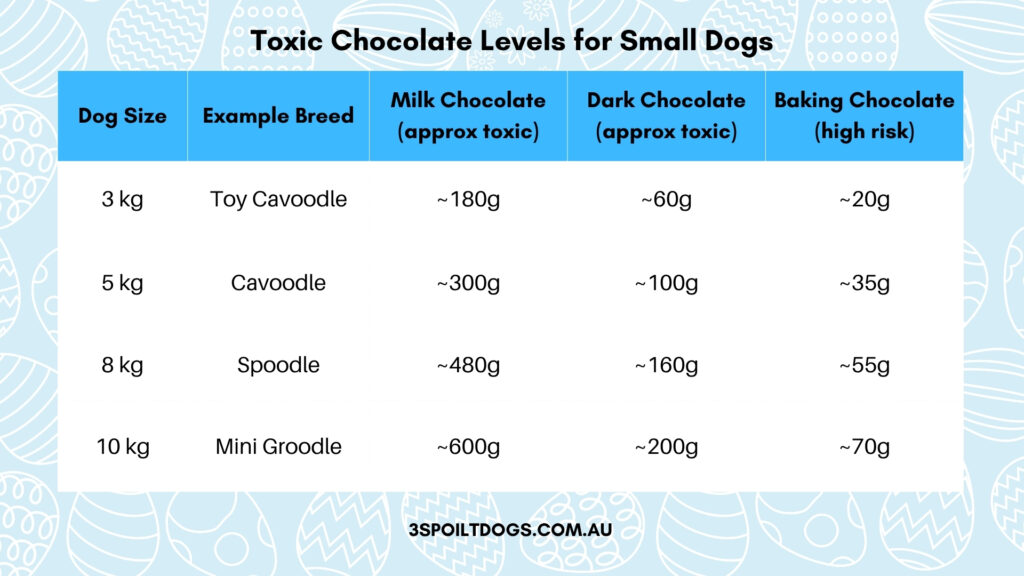
How this works:
- Milk chocolate ≈ low theobromine (~1–2 mg/g)
- Dark chocolate ≈ much higher (~5–15 mg/g)
- Baking chocolate ≈ extremely high (~15–25 mg/g)
Even 7g per kg of baking chocolate can reach toxic levels.
Little-Known Facts Most Dog Owners Don’t Know
- Fat Makes It Worse (Not Better)
Chocolate isn’t just toxic, it’s also high in fat, which can trigger pancreatitis. So even “non-toxic” amounts can still cause a vet visit.
- Symptoms Can Be Delayed
Signs don’t always show immediately. They can appear 6–12 hours later, which is why people underestimate the danger.
- Dark Chocolate Isn’t Just “Worse” — It’s a Different Risk Level
Dark chocolate can contain up to 10x more theobromine than milk chocolate.
That means:
- 1 small piece ≠ harmless
- It can be a medical emergency very quickly
- Dogs Re-Absorb the Toxin
Here’s one most people have never heard:
Dogs can reabsorb theobromine from their bladder, meaning the toxin stays in their system longer and symptoms can last days.
- White Chocolate Isn’t “Safe”
Yes, it has very low theobromine — but:
- It’s still high in fat and sugar
- It can still cause pancreatitis or digestive upset
Why Easter Is the Perfect Storm
At Easter, risk skyrockets because:
- Chocolate is everywhere (and often within reach)
- Dogs are curious (especially food-motivated oodles)
- Guests may accidentally feed them
- Wrappers + foil add an extra choking hazard
What To Do If Your Dog Eats Chocolate
Time matters. Don’t “wait and see.”
Immediately:
- Work out:
- Dog’s weight
- Type of chocolate
- Approx amount eaten
- Call your vet
There’s a small window (1–3 hours) where vets can induce vomiting safely.
Also check out this Dog Toxicity Calculator.
A “Spoilt Dogs” Safer Easter Alternative
At 3 Spoilt Dogs, we’re all about inclusion, without the risk.
Instead of chocolate, try:
- Carob-based dog treats
- Frozen yoghurt pup cups
- Lick mats with peanut butter (xylitol-free)
- A “Barkuterie Board” moment
Same fun. Zero emergency vet bills.
Chocolate toxicity isn’t about panic, it’s about awareness.
For small dogs especially, the difference between “fine” and “emergency” can be:
- A few extra grams
- A darker type of chocolate
- A delay in action
And during Easter? That risk multiplies.
So this season, keep the chocolate for humans… and the spoiling for the dogs in a safe way.