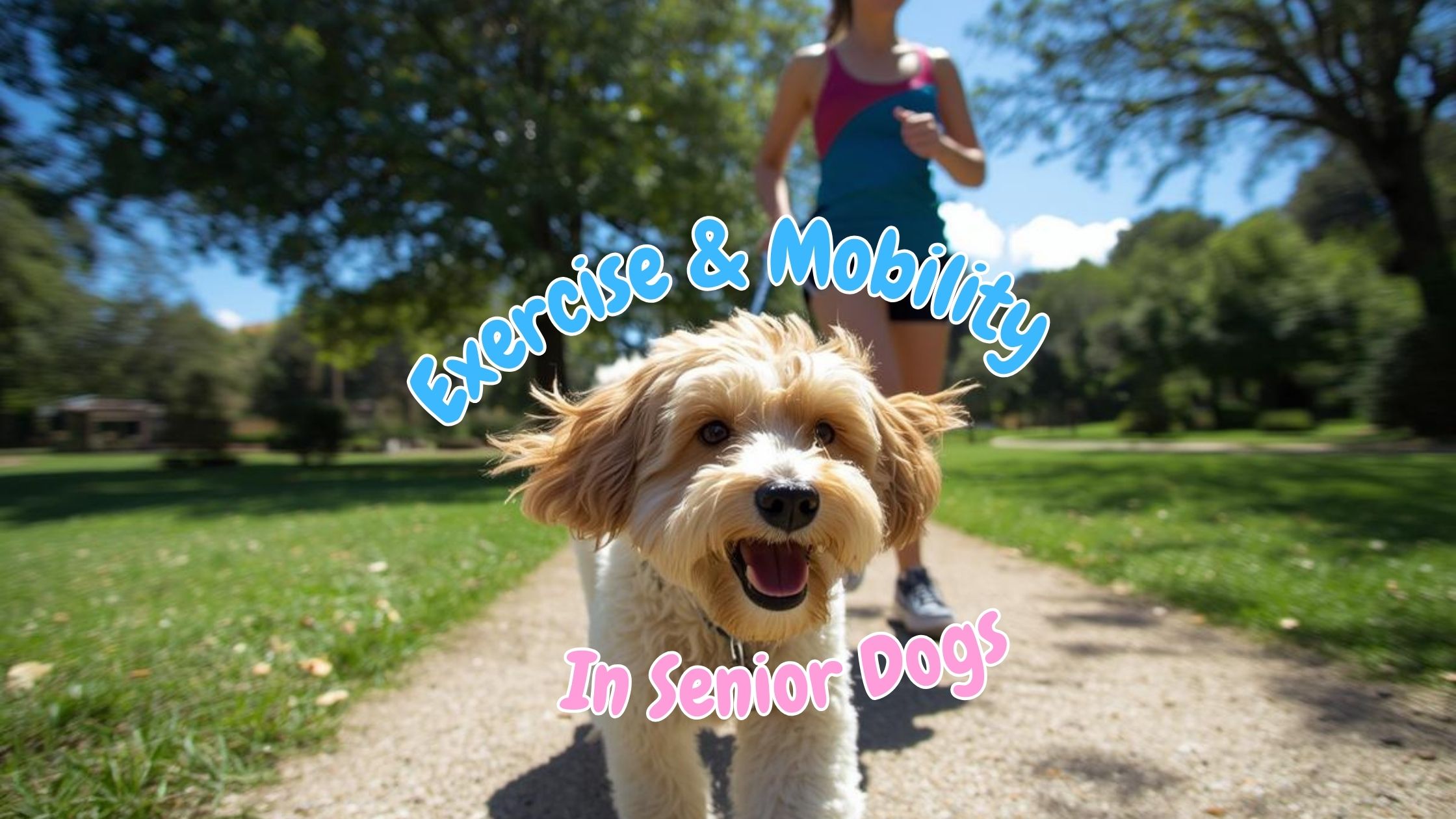
Exercise & Mobility in Senior Dogs
As our dogs grow older, their bodies begin to change in ways that are sometimes subtle and sometimes confronting. Walks may become slower and stairs may suddenly seem daunting. That effortless leap onto the couch might turn into a hesitant pause. I see this with both Latte and Neo. Both still enjoy walks but we keep them short and slow and that is pawfectly OK.
In this stage of life, exercise doesn’t stop being important it simply needs to change. In fact, the right kind of movement can be one of the most powerful tools we have to keep senior dogs comfortable, strong and happy.
Why Exercise Still Matters in Older Dogs
It’s a common misconception that older dogs should “just rest.” While rest is important, complete inactivity can actually worsen stiffness, joint pain and muscle loss.
Appropriate exercise helps senior dogs:
- Maintain muscle mass that supports their joints
- Improve circulation and heart health
- Reduce stiffness associated with arthritis
- Maintain a healthy weight (which reduces joint strain)
- Stay mentally stimulated and engaged
- Preserve confidence in their bodies
The key is shifting from high-energy activity to controlled, low-impact movement.
How to Spot Mobility Issues Early
Dogs are very good at hiding discomfort. Often what looks like “slowing down” is actually early joint pain or muscle weakness.
Watch for:
- Taking longer to stand up after resting
- Stiffness, especially first thing in the morning
- Hesitation before jumping, climbing stairs or getting into the car
- Slipping more often on smooth floors
- A shorter stride or shuffling back legs
- Sitting or lying down more frequently during walks
- Reduced enthusiasm for walks or play
- Changes in posture, such as a hunched back
These subtle signs are often the earliest indicators of arthritis or general mobility decline. If you notice changes, it’s worth discussing them with your vet sooner rather than later. Early support can make a significant difference.
The Best Types of Exercise for Senior Dogs
- Short, Gentle Walks
Multiple short walks are better than one long, tiring outing. Let your dog set the pace. Sniffing, pausing and moving slowly are all part of healthy engagement. Consistency is more important than distance.
- Controlled Lead Walks
Avoid sudden pulling or fast directional changes. A steady, even pace reduces strain on joints.
- Hydrotherapy or Swimming
Water supports the body while allowing movement without weight-bearing pressure. This can be excellent for dogs with arthritis or muscle loss. Professional hydrotherapy sessions are often ideal.
- Gentle Range-of-Motion Exercises
With veterinary guidance, slow and careful joint movements can help maintain flexibility. These should never cause discomfort.
- Low-Impact Enrichment
Mental stimulation is just as important as physical activity. Food puzzles, scent games, and calm interactive play help keep the brain active without stressing the joints.
How Much Exercise Is Enough?
There is no one-size-fits-all rule. Exercise needs depend on:
- Breed and size
- Existing medical conditions
- Weight
- Muscle tone
- Overall fitness history
A good general approach is:
- Exercise in short, manageable sessions
- Stop before fatigue sets in
- Monitor how your dog feels later that day and the following morning
If your dog seems more stiff the next day, limps, or avoids movement after exercise, the session was likely too much. Recovery is just as important as the activity itself.
Adjustments You May Need to Make at Home
As mobility changes, small environmental modifications can dramatically improve comfort and safety.
Consider:
- Adding non-slip rugs or mats on tiled or wooden floors
- Using ramps or low steps for beds, couches or cars
- Investing in orthopaedic bedding to cushion joints
- Raising food and water bowls slightly if bending becomes difficult
- Keeping nails trimmed to improve traction
Even small changes can reduce anxiety and prevent injury.
Weight Management Matters More Than Ever
Excess weight places additional stress on aging joints. In senior dogs, even a small weight reduction can noticeably improve comfort and mobility.
Balanced nutrition and appropriate portion control are essential components of managing mobility issues.
The Emotional Side of Mobility Changes
Mobility loss doesn’t just affect the body it affects confidence. Dogs who feel unstable or uncomfortable may become hesitant or withdrawn. Keeping routines predictable, offering gentle encouragement, and celebrating small movements all help maintain emotional wellbeing. Above all, patience becomes your most important tool.
When to Seek Additional Support
If mobility issues are progressing or significantly affecting quality of life, your veterinarian may suggest:
- Pain management plans
- Anti-inflammatory medications
- Joint supplements
- Physiotherapy
- Hydrotherapy
- Weight management strategies
Mobility support is not about “giving in to old age.” It’s about preserving comfort and dignity.
A Gentle Perspective
Senior dogs don’t need intense workouts. They need thoughtful movement. They need understanding. They need us to adapt alongside them.
Exercise in their later years isn’t about endurance or distance. It’s about maintaining independence, comfort and joy in the everyday moments – a short walk, a sniff in the garden, a slow wander beside you.
And sometimes, the most important thing we can do is move at their pace.