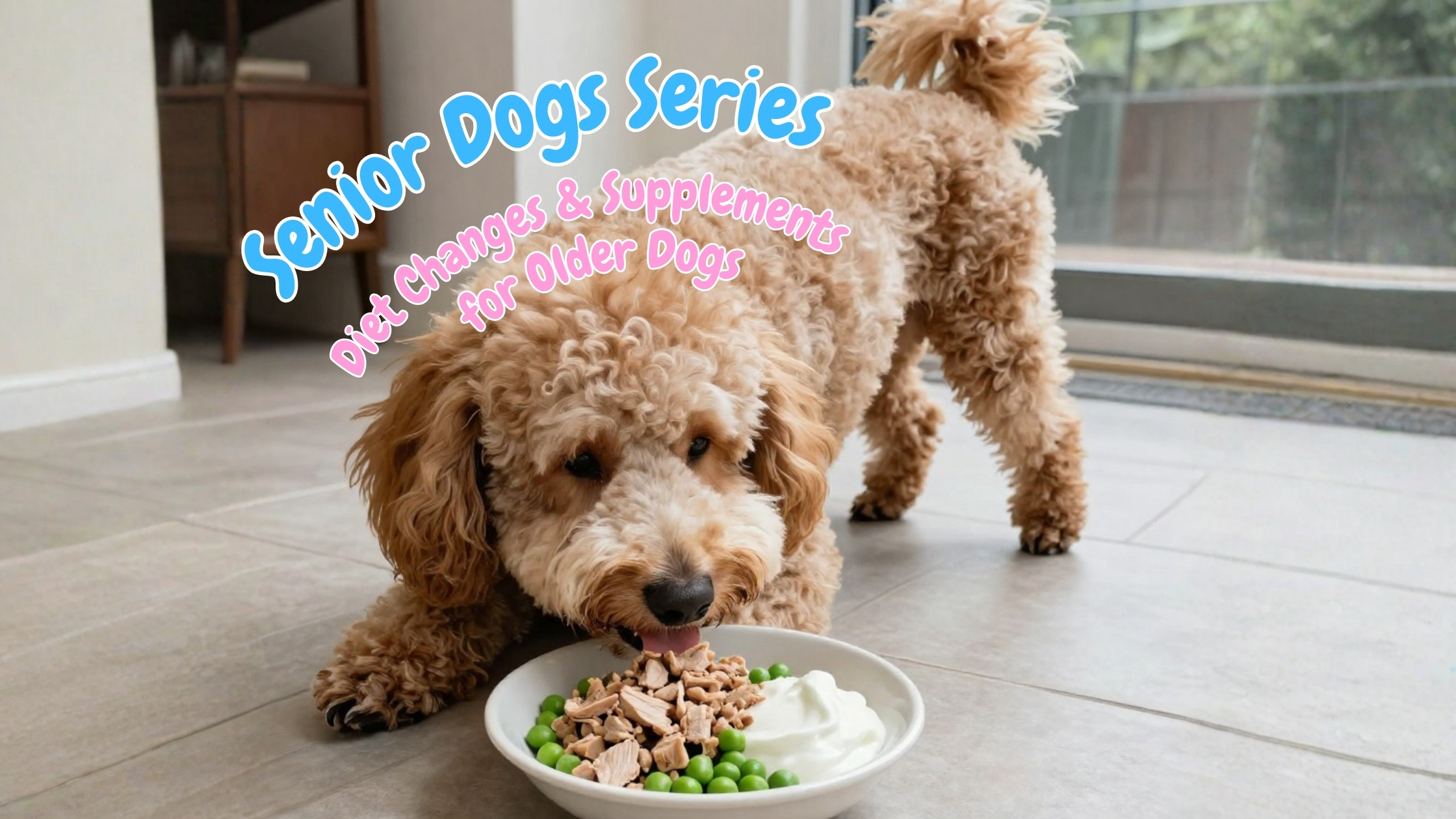
Senior Dog Series:
Diet Changes & Supplements for Older Dogs
As our dogs move into their golden years, their needs change and one of the biggest areas that shifts is diet. You might notice:
- They’re less active
- They gain (or lose) weight more easily
- They seem fussier with food
- They develop health conditions you’ve never had to manage before
In our senior journey at 3 Spoilt Dogs, we’ve learned that nutrition becomes less about “feeding a brand” and more about feeding the dog in front of you.
As the owner of 2 senior dogs (one 16 and one 14), I have changed their diet at various stages to suit their specific issues.
Do Senior Dogs Need a Different Diet?
Short answer is sometimes but not automatically.
There’s no magic age where every dog must switch to a “senior formula.” Instead, diet should change based on:
- Body condition
- Energy levels
- Muscle tone
- Medical conditions
- Bloodwork results
- Dental health
- Appetite changes
Some seniors thrive on their existing food. Others absolutely need adjustments. My Latte was diagnosed with kidney disease so now she has special Renal wet food for breakfast and I make special food mixes for her dinner.
Neo’s diet has also recently changed after his Hugo Health Diagnosis. This was based on the issues they found and what we needed to feed him for additional support.
Annual blood tests (sometimes every 6 months for seniors) give early insight into kidney values, liver function, thyroid levels and more often before symptoms appear (Check out Hugo Health for preventative care).
Signs Your Senior Dog’s Diet May Need Changing
Look for:
- Weight gain despite eating the same amount
- Weight loss without trying
- Muscle loss along the spine or hips
- Increased thirst or urination
- Digestive upset
- Dull coat
- Reduced appetite
- Dental pain affecting chewing
If you notice these changes, it’s time to reassess nutrition not just portion size.
Common Health Conditions & Diet Adjustments
- Kidney Disease
Kidney disease is common in older dogs. Tia had this and also Latte and its mean she can’t have certain foods. I make dehydrated treats for her and batch cook her food so has the right diet to help her kidneys function as they should. (wont cook for hubby though LOL)
Diet changes usually include:
- Reduced phosphorus
- Controlled high-quality protein
- Increased omega-3 fatty acids
- Lower sodium
Prescription renal diets exist, but there are also fresh, balanced home-prepared options formulated by veterinary nutritionists.
Never dramatically reduce protein without veterinary guidance as seniors still need protein to maintain muscle. I strongly suggest working with a pet nutritionist which is what we did for our girls.
- Liver Disease
Liver support diets often:
- Include moderate, highly digestible protein
- Avoid copper (in certain conditions)
- Support detox pathways
Supplements like milk thistle are sometimes recommended — but only under vet supervision.
- Arthritis & Mobility Issues
Diet can reduce inflammation.
Look for:
- Omega-3 fatty acids (fish oil)
- Joint-support supplements (glucosamine, chondroitin, green-lipped mussel)
- Maintaining lean body weight
Even small weight reduction can significantly reduce joint strain. There are a lot of supplements which support mobility so look for a quality one to use as needed.
- Dental Issues
If chewing becomes difficult:
- Switch to softer fresh food
- Use gently cooked meals
- Consider raw (if appropriate and safely managed)
- Soak dry food (if still using it)
Sometimes appetite loss is actually dental pain.
- Cognitive Decline (Dog Dementia)
Nutritional support may include:
- Omega-3s
- Antioxidants (Vitamin E, C)
- Medium-chain triglycerides (MCT oil)
Specialised cognitive diets do exist and may help support brain function.
Supplements for Senior Dogs
Supplements are not a substitute for good diet — but they can be powerful additions.
Common senior supplements include:
- Fish oil (Omega-3s)
- Joint support blends
- Probiotics
- Coenzyme Q10
- SAMe (liver support)
- MCT oil (cognitive support)
- Turmeric (anti-inflammatory, with caution)
Most can be bought from the supermarket. Always check the dosage, ensure quality sourcing and check with your vet.
How to Know If the Diet Is Working
Watch your dog, not just the bowl.
Positive signs:
- Stable weight
- Good muscle tone
- Bright eyes
- Consistent stools
- Healthy coat
- Steady energy
- Comfort in movement
If things decline, reassess early. Senior dogs change faster than younger dogs — what worked last year may not work now.
Transitioning a Senior Dog to a New Diet
Go slowly.
- Transition over 7–14 days (sometimes longer for sensitive tummies)
- Mix increasing amounts of new food
- Monitor stools and appetite
- Introduce one change at a time
If your dog has kidney or liver disease, consult your vet before changing anything.
Sometimes seniors eat less. Sometimes they become fussy. Sometimes their needs change rapidly. Our role shifts from “feeding for growth” to feeding for comfort, support and quality of life.
There is no one “perfect” senior diet. There is only the right diet for your dog. As our dogs age, we adjust alongside them gently, thoughtfully and with love. Because in the golden years, nutrition isn’t about longevity alone. It’s about comfort, dignity and enjoying every single day together.