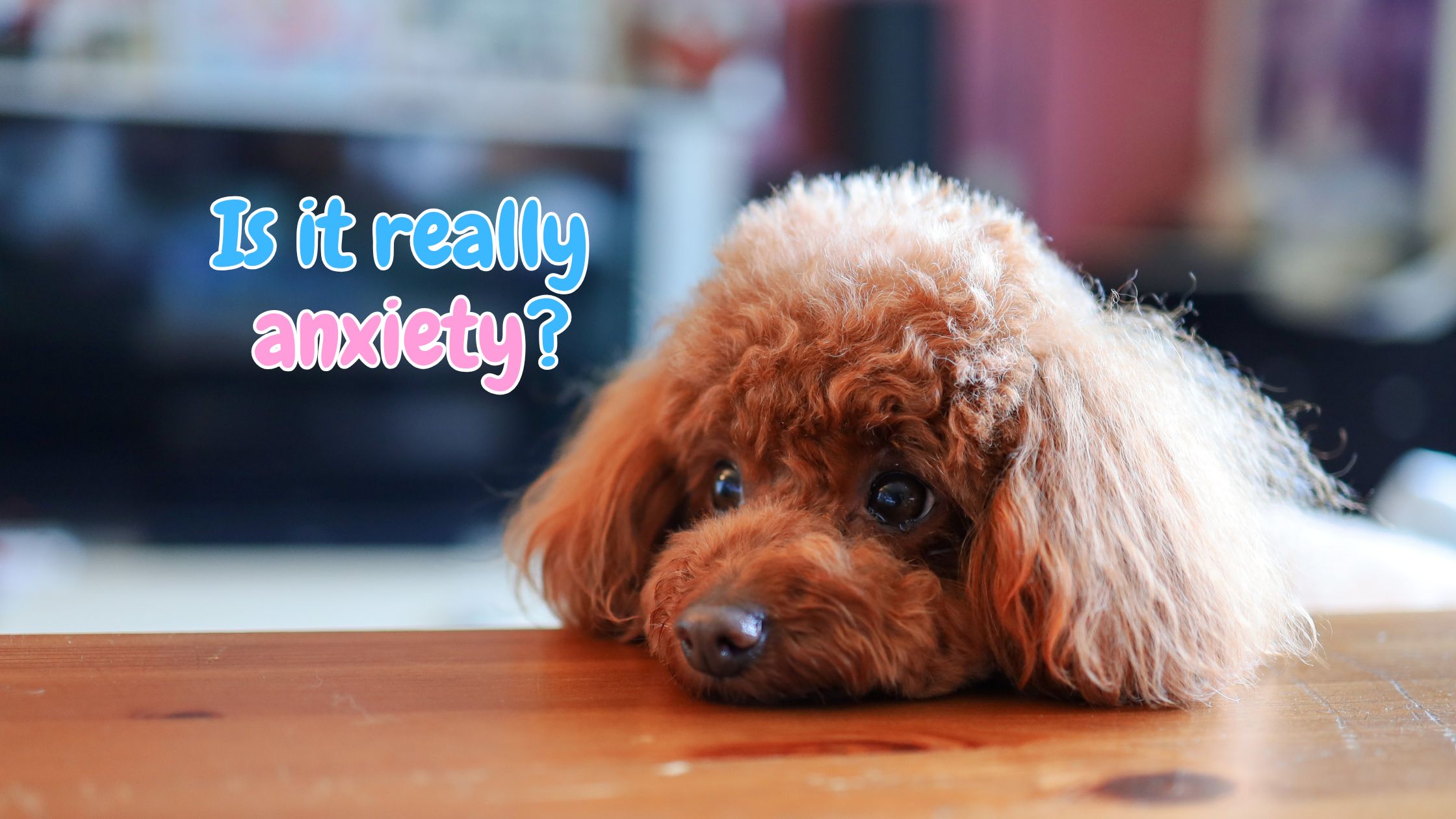
Is It Really Anxiety? Understanding the Signs of Anxiety in Dogs
“My dog has anxiety.”
It’s something we hear all the time, particularly among Cavoodle and Oodle owners. But is every nervous, clingy or reactive dog actually suffering from anxiety? Or could there be something else going on?
In a recent episode of the Pawsitively Spoilt Podcast, I spoke with canine behaviour specialist Sarah Rutten from The Canine Perspective about one of the most misunderstood topics in dog ownership: anxiety. One of the biggest takeaways was that understanding the signs is the first step to helping your dog feel happier, calmer and more confident.
What Is Anxiety in Dogs?
Anxiety is essentially an activated nervous system. When a dog feels unsafe, overwhelmed or uncertain, their body shifts into a heightened state of alertness.
The important thing to remember is that anxiety isn’t always severe. Some dogs may only feel anxious in certain situations, such as:
- Being left alone
- Meeting new people
- Storms and loud noises
- Visiting unfamiliar places
- Interacting with other dogs
Not every anxious dog is anxious all the time.
Common Signs of Anxiety
Many owners expect anxiety to look obvious, but the signs can be surprisingly subtle.
Some common indicators include:
- Excessive yawning
- Lip or nose licking
- Panting when it’s not hot
- Shaking off when not wet
- Pinned-back ears
- Whining
- Restlessness
- Wide eyes showing the whites (often called “whale eye”)
Dogs will often display several of these signs together rather than just one. Learning to recognise them can help you identify when your dog is feeling uncomfortable before behaviours escalate.
Is It Anxiety or Just Behaviour?
This is where many owners get confused. Not every unwanted behaviour is anxiety.
Sometimes a dog is:
- Under-stimulated
- Over-excited
- Lacking training
- Responding to a learned habit
- Seeking attention
Rather than labelling a dog as “naughty”, it’s more helpful to ask what they’re trying to communicate. Behaviour is often a clue that something needs attention.
What Causes Anxiety?
There isn’t a single cause. Anxiety can be influenced by a combination of factors, including:
Genetics: Some breeds, including many Oodles, can be more prone to anxiety-related behaviours.
Poor Socialisation: Puppies have a critical socialisation window where positive experiences help build confidence. Missing out on exposure to different sights, sounds, people and environments can sometimes contribute to anxiety later in life.
Diet: The connection between gut health and brain health is becoming increasingly well understood. A poor-quality diet can impact overall wellbeing, including behaviour.
Unmet Needs: Dogs need more than food and shelter. They also need exercise, mental stimulation, opportunities to explore, social interaction and enrichment activities
When these needs aren’t being met, anxiety and behavioural issues can sometimes develop.
Simple Ways to Help an Anxious Dog
The good news is that there are practical things owners can start doing immediately.
- Meet Their Basic Needs
Before looking for complicated solutions, make sure your dog is getting:
- Appropriate exercise
- Quality nutrition
- Mental stimulation
- Social interaction
- Adequate rest
These foundations often make a bigger difference than people realise.
- Let Them Sniff
One of Sarah’s favourite recommendations is something called a Sniffari.
Instead of focusing on distance or obedience, allow your dog time to explore and sniff at their own pace. Research suggests sniffing may help reduce cortisol, one of the body’s primary stress hormones. For many dogs, a slow sniff-focused walk can be more beneficial than a fast-paced exercise session.
- Look for Patterns
Pay attention to when the behaviour occurs. Does your dog become anxious:
- When you pick up your keys?
- Around children?
- When visitors arrive?
- At the dog park?
Recognising patterns can help identify triggers and make it easier to address the underlying cause.
- Get Professional Help
If your dog’s anxiety is affecting their quality of life, don’t try to navigate it alone. A qualified force-free trainer, behaviour specialist or behavioural veterinarian can assess what’s happening and develop a plan tailored to your dog’s needs.
What About Calming Products?
There are plenty of calming supplements and products on the market. Some can be helpful, particularly for dogs with mild anxiety. Others may have little effect.
The key is understanding the severity of your dog’s anxiety and addressing the root cause rather than relying on a quick fix. For some dogs with severe anxiety, medication may be an important part of improving their quality of life, but it should be considered alongside a broader behaviour plan.
The Biggest Lesson? Listen to Your Dog
When asked what an anxious dog would say if they could talk, Sarah’s answer was simple: “Listen.”
Our dogs are constantly communicating through their body language and behaviour. The more we learn to recognise those signals, the better equipped we are to support them.
Anxiety doesn’t mean you have a bad dog. It often means you have a dog that is struggling with something and needs your help.
By understanding the signs, meeting their needs and seeking support when needed, you can help your dog feel safer, calmer and more confident in the world around them.
Listen to the Podcast

Pawsitively Spoilt is a podcast aimed at helping dog owners raise a happy and healthy Oodle. Click here to listen. You can also subscribe and listen through Amazon Music, Spotify, or Apple Podcasts.